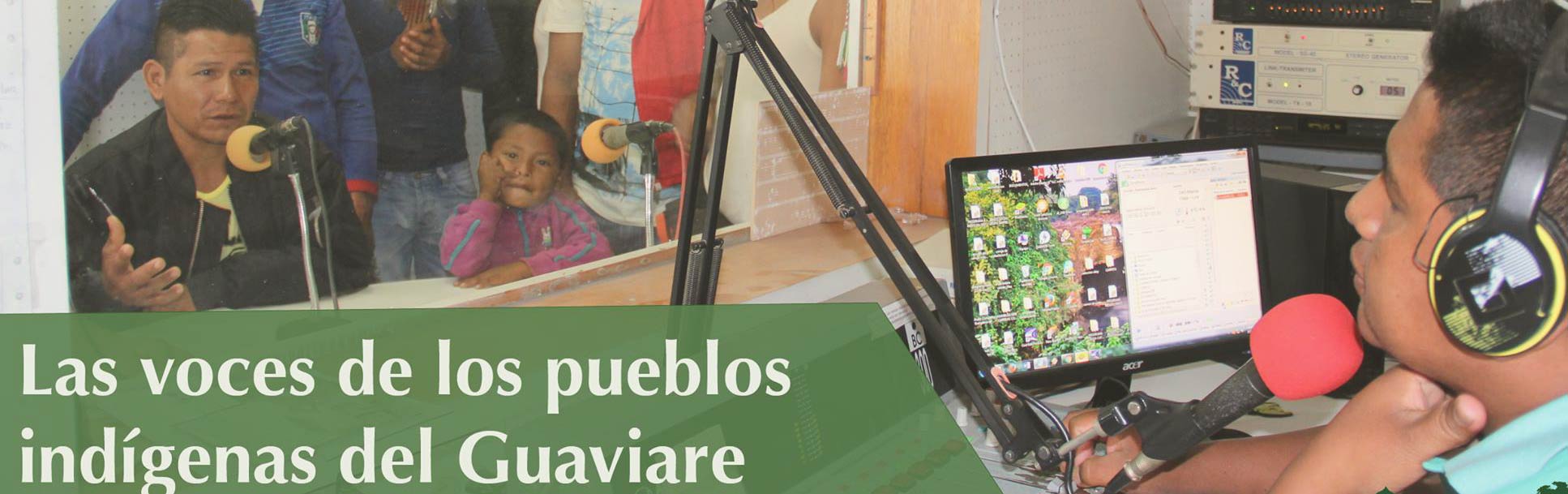
The Voices of the Indigenous Peoples of Guaviare- First season

Capítulo: Historia de poblamiento del departamento del Guaviare Objetivo general: Abordar la historia de poblamiento geográfico, cultural, histórico, social, económico del departamento del Guaviare que involucre la visión de datos de análisis…

Continuar leyendoThe Voices of the Indigenous Peoples of Guaviare- First season

LA SITUACIÓN DE DERECHOS FUNDAMENTALES Y COLECTIVOS DEL PUEBLO NÜKAK EN EL CONTEXTO DEL POS ACUERDO DE PAZ

Aliquam laoreet orci quis risus vulputate tempor. Quisque aliquet, ipsum at mattis mattis, tortor nibh cursus lorem, ac iaculis metus sem vitae purus. Vivamus suscipit velit nec maximus interdum.

Continuar leyendoLA SITUACIÓN DE DERECHOS FUNDAMENTALES Y COLECTIVOS DEL PUEBLO NÜKAK EN EL CONTEXTO DEL POS ACUERDO DE PAZ

Nükak

Artesanías: tejidos de vida La artesanía es la expresión del quehacer de los pueblos, de sus costumbres, del uso que dan a los instrumentos, por tanto superan el objeto como…

Continuar leyendoNükak

Nükak

Craft: fabrics of life Crafts are the expression of indigenous people's work and cultural heritage, their customs, the use they give to things, therefore they surpass the object as a…

Continuar leyendoNükak

Institutional

The Akubadaura Community of Jurists builds scenarios for joint action and exchange of knowledge between ethnic organizations (indigenous and Afro), and their communicators; establishes dialogues with local, regional, national and…

Continuar leyendoInstitutional

Institucional

La Comunidad de Juristas Akubadaura construye escenarios de acción conjunta e intercambio de saberes entre organizaciones étnicas (indígenas y afro), y sus comunicadores y comunicadoras; establece diálogos con medios de…

Continuar leyendoInstitucional

Emberá

The Emberá (people) People are made up of two groups: the Dobida (river people). The Eyábida (mountain people) are divided into the Katio and Chamí. Geographically, they are "originally from…

Continuar leyendoEmberá

Emberá

Los indígenas Emberá (gente) están constituidos por dos grupos: los Dobida (gente de río). Los Eyabida (habitantes de montaña) que a su vez se dividen en Katío y Chamí. Geográficamente…

Continuar leyendoEmberá